
Can you tell me a little about your background, where you grew up and how you first got interested in art and photography?
– I was born in Marseille in 1976 into a family where culture and art history were considered essential for any well-rounded individual. My mother; passionate about literature and painting, and my father, with his appreciation for architecture and bronzes, instilled in me an artistic education from a very young age. Museums, monuments, and antique shops were favourite destinations during each of our holidays. Later, as a teenager, while subscribing to Vogue magazine, fashion photography began to capture my attention. The magazine’s pages were filled with photographs influenced by the works of Man Ray and the avant-garde. In this magazine, I discovered the first contemporary photographer who truly made an impression on me: Nick Knight. It was through his work that I experienced the true power of photography.
What did you study and where?
– I completed my higher education in Paris at ICART, the Higher Institute of Artistic Careers. I had three exciting years with renowned professors like Nicolas Bourriaud, who would soon become the co-director of the Palais de Tokyo. My life was simple: studying during the day, exhibition openings and shows at night, and scouring the flea markets of Saint-Ouen or Vanves at dawn on weekends for photographs and design pieces. A constant buzz and stimulating atmosphere, pure bliss.
After defending my thesis, I received my diploma at the Senate. The diploma was presented with great fanfare, signed by the sculptor Arman and the collector Pierre Bergé. It was quite amusing for me, and also completely unexpected, to find myself in this setting, so far removed from this world just three years earlier.
Did you have a mentor who was important?
– Absolutely! And I didn’t have just one mentor, but a pair of mentors: Alain and Françoise Paviot. When I was a young student in Paris, I had the incredible opportunity to intern at Françoise Paviot’s gallery and then at Alain Paviot’s studio. I don’t have words strong enough to express the admiration I have for them. Their passion, their knowledge, their commitment to photography were extraordinary. They shaped my perspective on photography. They will always be my role models, both professionally and personally.
Having finished your education, when and how did you launch your career?
– One of my strengths is my ability to multitask and to thrive on it. After my studies, I worked for two galleries simultaneously: Galerie BAXTER in Saint-Germain-des-Prés, owned by my uncle, which specialized in antique prints; and I also worked evenings and holidays for GANDY GALLERY in Prague. I also made occasional appearances at other friendly galleries in Saint-Germain for their exhibition openings. I participated several times as an assistant at international art fairs: Paris Photo (starting in 1997), FIAC, LOOP BARCELONA, and ART BRUSSELS. In 2002, I decided to dedicate myself more seriously to the secondary market. I spent two years working daily at the Hôtel Drouot auction house to hone my skills. Then for three years, I worked at Alexandra Reza, a high-end jewellery store on Place Vendôme in Paris, an experience I will never forget.
How did your career progress?
– In 2017, a few years after returning to Marseille, I became a private dealer in photographs and prints. Then I met Paul Benarroche, a photography expert. I established my own appraisal practice in 2022. I now work as an expert for auction houses. I am also a court-appointed expert for the Court of Appeal of Aix-en-Provence and a member of the board of the Compagnie des Experts Judiciaires d’Art (Company of Court-Appointed Art Experts).
When and how did you enter the auction business?
– I’ve always been involved in the auction world, but after meeting Paul Benarroche, I became his assistant and then his partner. Together, we produced a number of auction catalogues for various auction houses. I now work independently for my own firm.
What auction houses do you work with?
– In my early career I worked at DE BAECQUE. For the past few years, I have primarily collaborated with Maison R&C. However, I am occasionally approached by other auction houses in the south of France.
You are based in Marseilles. Is it difficult to get great material consigned to your auctions?
– Marseille has a rich history and is a very special place, open to the Mediterranean. There are some beautiful collections in the south of France. I’m mostly approached for antique and modern photography, but also for books, manuscripts, and historical documents. Lately, it’s become more difficult for me to obtain rare pieces to appraise. But it’s a city full of surprises and unexpected turns. In this profession, you always have to be on your toes, especially since the collectors who submit works to me aren’t exclusively from the south of France.
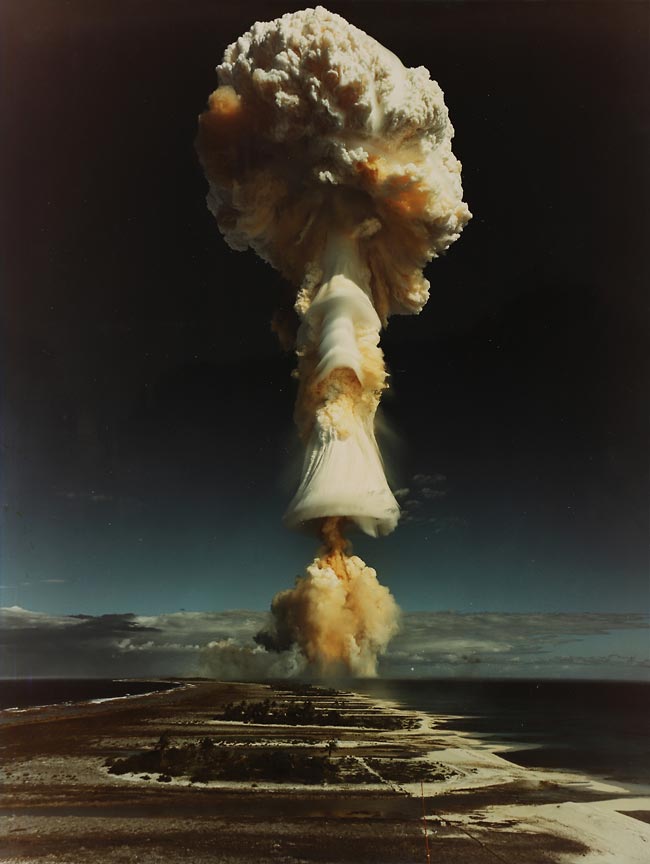
Can you tell me about the range of material you will typically have on an auction?
– I focus on travel photographs, Asia, Africa, the Mediterranea), 19th-century albums, modern press photography, and occasionally contemporary pieces. Prints by unidentified photographers or signed works are also included and the prices are always affordable so everyone can find something to enjoy.
Do you work outside the auction world?
– I regularly provide expert opinions to colleagues in other specialties when they are consulted by their clients regarding photographs, books, manuscripts, and posters. Private individuals also contact me when they need my advice on developing their collections.
Do you collect photographs yourself?
– I have been collecting photographs, albeit very modestly, for over 20 years. I am drawn to the strange, to experimentation, and to morbid works; it’s my humble cabinet of curiosities. I am fond of press photography related to historical events of the 20th century. I also have a collection of photographs on the history of the kibbutzim in Israel from 1920 to 1970.